The concept of flying payloads, people, or simply air itself usually lands on a quiet early morning when the skies is a specific blue and the world really feels suddenly three-dimensional. For several, the desire for ending up being a pilot is less about majesty and even more regarding small, repeatable steps that accumulate. It is a self-control built on practice, timing, and real-world issue solving as opposed to sheer ideas. If you're beginning with fresh start, you're not the only one. This guide intends to map functional surface-- just how to pick a course, what training needs, and what it feels like to earn a pilot certificate without glossing over the tough parts.
The attraction of the cabin is not just the adventure of lift and thrust. It is the sense of command that features comprehending climate patterns, fuel administration, and the refined psychology of decision making in minutes when the clock is ticking. You do not need to be birthed with some innate knack for air travel. Most pilots show up via late evenings at study workdesks, mornings at the flight school, and a steady technique of turning complex problems into concrete actions. The journey is as much concerning constructing a reputable routine as it has to do with grasping the airplane.
Starting with the why helps you maintain momentum when your very first flights feel unpleasant or when the weather demands being contrary. Why do you want to fly? Is it for occupation leads, individual experience, or the straightforward happiness of understanding a craft that reminds you of just how little the globe is and exactly how big the skies can be? The straightforward solution issues, since it anchors options later on-- just how much time you invest, which training track you pick, and how you balance it with other life demands.
A sensible method to discovering to fly starts by demystifying the procedure. Trip is not regarding memorizing every tool and list at once. It has to do with building a robust toolkit: a trusted way of thinking, a strong structure in standard aerodynamics, great routines in radio interaction, and a disciplined strategy to safety. The aircraft is ruthless of careless thinking, yet it rewards clear, methodical job. You will certainly discover to translate theory into technique with a rhythm of research study, flight, debrief, and adjustment. The most successful trainees I have understood are not the ones who fly one of the most; they are the ones who gain from every hour in the air and deal with each flight as a phase in a longer narrative.
As an experienced observer of training paths, I have actually seen 3 core realities continually form outcomes: accessibility to a properly designed program, the high quality of guideline you get, and the daily consistency with which you use what you find out. Gain access to issues because not every town has a dazzling flight school with a long track record. Some people train at smaller, more intimate colleges, while others travel to local centers that supply a larger selection of aircrafts and teachers. The quality of instruction issues due to the fact that a client, precise instructor can alter a trainee's trajectory in manner ins which cash can deny. Consistency issues due to the fact that aeronautics is a sporting activity of built up small advantages; a couple of missed session or hurried cross-country legs can develop self-confidence voids that ripple into extra serious troubles later on.
In the world of air travel, you will certainly listen to a great deal regarding qualifications and timelines. It serves to mount your ambitions with a concrete sense of what you wish to accomplish and by when. Do you want a personal pilot certificate so you can fly on weekends with friends? Are you aiming for a business certificate that allows you to be spent for flying? Or do you imagine a future profession in air transport, where hours and kind ratings open doors to airlines? Each course needs a distinctive blend of time, cash, and threat tolerance. The numbers vary by nation and by regional regulations, but the underlying logic continues to be the very same: established clear milestones, buy principles initially, and withstand the urge to skip actions since they really feel tedious.
Before you walk towards the path of opportunity, there are a few useful truths to realize. Aeronautics safety and security depends upon attention to weather, upkeep, and the airplane's systems. You will learn to read a weather condition rundown not as a haze of information yet as a tapestry that notifies your danger evaluation for a provided flight. You will come to be well-versed in checklists and the factor they exist, not just their words. You will certainly gather trip time across daylight and night hours, throughout calm and complicated air conditions. You will certainly additionally come to be fluent in the language of threat monitoring, discovering to claim no to a trip you can not securely total and to err on the side of additional fuel, added daylight, and extra caution when the photo is not clean.
The roadway to a very first certification is led with little, teachable moments. Lots of people start by seeing a flight school for an initial trip, sometimes called a discovery flight. A seasoned instructor will lead you through the cockpit, clarify the basics of just how the controls really feel, and help you answer an essential concern: do you take pleasure in the acts of believing and doing the tasks in real time? This first experience usually makes clear whether aeronautics is a leisure activity you will certainly go after with full severity or an interest to please for a season. From there, the trip has a tendency to take shape right into a sequence of landmarks: medical clearance, ground college, FAA or nationwide aviation authority requirements, and flight hours that verify you can manage the airplane under a large array of conditions.
One of one of the most vital very early choices concerns the sort of training you go after. As a whole, you will find 2 wide tracks. The first emphasizes a typical, instructor-led course in a tiny aircraft such as a Cessna 172 or a Piper Archer. The 2nd leans toward a more contemporary, incorporated program that mixes self-study, simulator time, and organized flight hours with a more comprehensive focus on choice production and safety and security culture. Both have their merits. The initial path often provides a tangible sense of progression and an uncomplicated course to a personal certificate. The secondly can speed up the development of audio habits, particularly for those who respond well to an extra formalized framework. Your option must fit your personality, your timetable, and your budget.
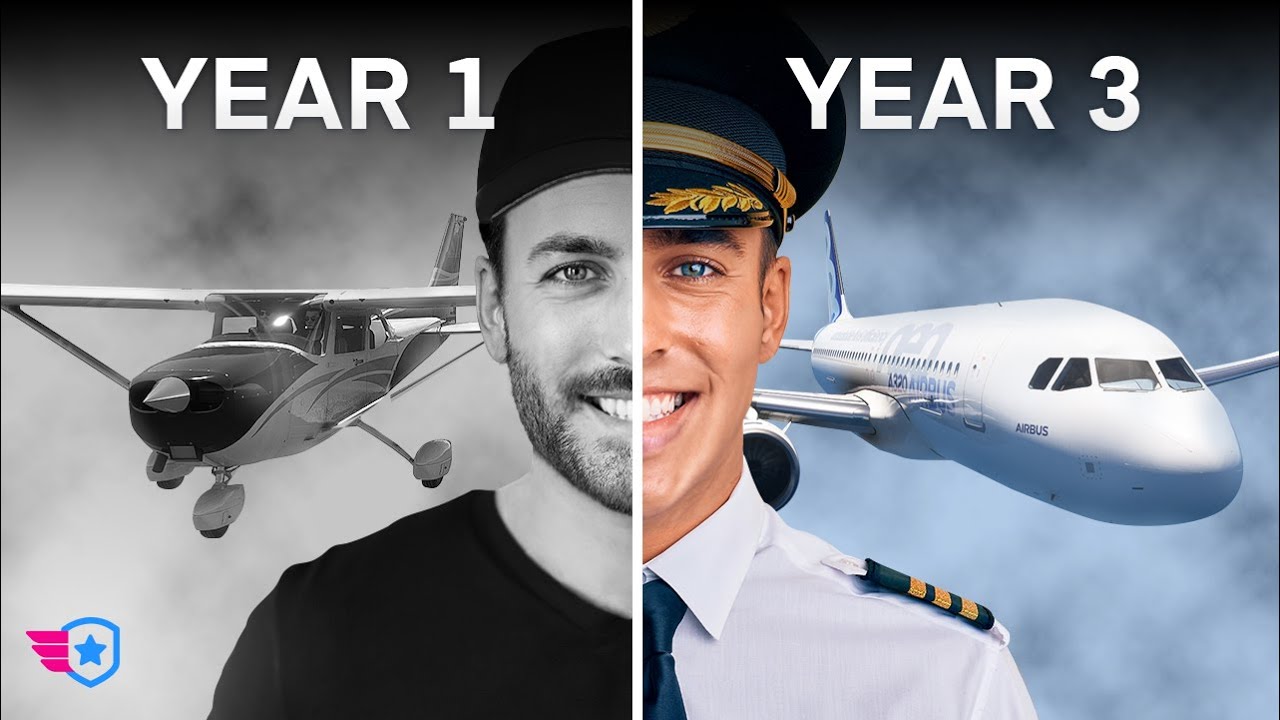
As you near the factor of gaining your first certificate, you will certainly lug a mix of enjoyment and tiredness. There are long minutes between solo flights when you wonder about whether you have actually discovered sufficient, whether your confidence can endure the pressures of actual airspace, and whether this fascination will settle in the long run. Those uncertainties are not indicators of weak point; they expose the sincerity you require to advance. The risk-free pilot is not the one that never ever erred, yet the one who acknowledges a blunder quickly, communicates it plainly, and takes restorative activity without apology. In technique, that means you will embrace debriefing sessions with your instructor that concentrate on concrete examples, not lectures. It implies you will certainly track trends in your own performance, looking for patterns-- like recurring stalls at certain airspeeds or systematic lapses in radio phone calls-- that you can deal with before they end up being habits.
The tools and logistics of your training be entitled to thoughtful focus as well. Your thickness of understanding is usually connected to exactly how well you stabilize airplane time versus research time. You might discover on your own spending evenings in a peaceful corner of the flight terminal, reading charts, the rules of aerodynamics fundamentals, and airspace rules. You may bring a worn notebook filled with doodles and suggestions, a simple yet efficient artifact of your expanding mental map of the skies. You will additionally experience upkeep facts that being in the background of every flight. Tiny troubles, left uncontrolled, have a way of developing into larger headaches mid air. The security society in aviation educates you to value preflight checks, to document and report the problem of an aircraft truthfully, and to value the silent rhythm of ongoing maintenance.
In discussing functional actions, it aids to anchor your plan in some realistic frames. The complying with checklist captures the important building blocks most novices come across, and it can serve as a portable guide you take another look at as you proceed. This is not an inflexible prescription, however a small map of the roads most passed by those who hang around flight terminals enough time to see patterns emerge.
- Decide on a training track that lines up with your objectives and life schedule. Get clinical clearance suitable to your nation, after that start ground institution to build a solid theoretical base. Choose a flight school or program with a track record for safety, clear interaction, and constant training staff. Establish a consistent method routine that includes both real flight time and research time for weather, the rules of aerodynamics, and navigation. Save and budget for the inescapable costs, including aircraft rental, teacher costs, assessment fees, and possible multi-hour training blocks.
These items may appear simple, yet they crystallize the stress most novices really feel in between need and reality. A well-chosen track decreases friction later on, the appropriate school supplies a steady discovering atmosphere, and a disciplined regular keeps you moving on even when climate or individual life tests your commitment.
In the cockpit, you discover that every flight is a settlement in between danger and benefit. You discover to fly the plane, certainly, yet you also find out to fly your mind. The first solo flight, a moment several pilots recall with a smile and a tip of shock, is not merely about the aircraft leaving the ground. It has to do with the minute you realize you can handle the entire circumstance on your own, from takeoff through the climb, the cruise, and the touchdown. The sensation is not just alleviation; it is a silent form of validation that years of method have converted right into skills. The day after that landmark you get up with new concerns and new limits. The airspace you've found out to value expands, not because it all of a sudden comes to be more hazardous, yet since your capacity has expanded enough to consider even more of it as within your control.
A typically ignored facet of training is commercial pilot exam prep the social and specialist ecology around you. Aviation is a social task in the best sense: you learn from trainers who often stay advisors long after you make your initial certificate, you collaborate with fellow pupils that share similar passions, and you engage with air traffic controllers that assist you navigate intricacy with calm, exact instructions. The top quality of these interactions can dramatically influence your understanding contour. A person instructor who explains a tough principle with a practical analogy can avoid days of complication. A considerate student who asks clearing up inquiries produces a dialog that benefits everybody in the airspace. You promptly discover that air travel is as much concerning society as it is about physics. The society you cultivate-- humbleness, interest, precision-- will bring you deeper into the world than any single flight hour.
There are, naturally, side cases and personal restraints that form virtually every student tale. Some pilots start their journey after discovering a temporary home window of life-- a gap between careers or a lull in a long-lasting task. Others handle training with household responsibilities, or with a requiring permanent task. For many, the functional concern ends up being not whether they must start however how to structure a plan that stays lasting over years instead of months. It is common to line up training with a specific timeline, such as pursuing a private certification prior to a huge travel period or finishing tool training to add a layer of safety and security and capability for flying in varying climate. One of the most prudent pilots approach this with a long view, recognizing that air travel is a marathon rather than a sprint, which a well-paced pace will yield better safety and satisfaction.
One final location where experience shapes results is the connection between time, price, and learning. Aeronautics lives at the crossway of high obligation and high expense. There is no global guideline that claims one have to exhaust a checking account to begin flying, but there is a truth that the more you intend your financials, the much less anxiety you carry into the understanding setting. Temporary cost savings hacks can backfire if they erode safety and security or cause hurried decisions. On the other hand, a well-managed budget plan that schedules a cushion for periodic six-hour block flights or a few added simulator sessions can increase comfort with the aircraft and airspace. In my very own profession, I viewed students who treated their training like a small company-- tracking hours, forecasting expenses, and scheduling lessons with a purpose-- outperform peers who treated it as a hobby and wished for the best. The distinction is not intelligence; it is technique and clearness concerning the next right step.
The course ahead is not a straight line. It zigzags via weather windows, upkeep hold-ups, and the unavoidable curveballs of life. Yet there is a stable core you can count on: experiment purpose, learn with sincerity, and remain grounded in safety and security. The minute you recognize that an offered trip is much more concerning making the clever decision not to fly than regarding pushing with in spite of the risk, you start to populate the attitude of a responsible pilot. This state of mind is truth money of air travel. It will certainly help you choose when to continue and when to stop, and it will lug you with the inevitable moments when you encounter a boundary you can not cross on that specific day.
If you're still reading and the concept of investing years chasing a certification really feels frightening, below is a practical tip: development is rarely significant in aviation. It tends to turn up as peaceful capability built up over lots of hours. You do not need an excellent weather condition home window to discover. You do not require remarkable memory to take in ground school. You do not need to be the fastest to solo. You require to appear, do your work regularly, and let the day-to-day renovations substance. The very first trip you complete where you really feel the airplane react to your intents with self-confidence is a concrete signal that you are moving in the best instructions. The 2nd, 3rd, and tenth trips improved that success, weaving together separate lessons into a coherent skill set, is where the genuine magic begins.
As you surround your initial milestone, you will additionally begin to pick up a more comprehensive obligation. A pilot does not operate in isolation; a pilot is responsible for the safety and comfort of everybody aboard and for the integrity of the airspace around. This sense of obligation expands with practice. It additionally invites you to choose coaches, to observe even more skilled pilots, and to absorb the several little pointers that only come from hours in the cabin and hours of reviewing the skies. It is a craft that invites you to continue to be curious, to stay versatile, and to approve that aeronautics will constantly need even more from you than you expect, even as it provides you more than you ever imagined.
For those who hunger for the final item of the problem-- the moment you hold a certificate in your hand and the official voice on the radio confirms your new condition-- there is a mix of alleviation and resolve. You have made more than a card or a stamp. You have made a way of believing that blends science with judgment, and a set of habits that maintain you via the unpreventable days when the weather outside does not satisfy your plans. You have signed up with a community of people who recognize that flight is not a singular accomplishment however a shared practice, a network of individuals that will certainly be there on damp early mornings and on gusty afternoons, to help you remain risk-free and to help you fly farther than you once imagined.
In the end, becoming a pilot starts with a single decision to start. It progresses with a series of cautious choices: the best track, the appropriate school, the ideal teacher, the correct amount of time, and the best equilibrium of aspiration and restraint. It is a choice to purchase a skill that grows with your dedication, a discipline that rewards perseverance and precision, and a course that opens up doors not simply to the open skies yet to the method you think about threat, duty, and possibility. If you approach it with sincerity, rigor, and a healthy respect for the craft, you will locate that the sky welcomes you not as a conqueror but as a companion, ready to show you exactly how to read the air and exactly how to use your hands and mind to chart a training course via it.
If you are contemplating this trip today, right here are a couple of based takeaways to continue right into your next steps. Initially, acknowledge that your price of progression will be shaped by your consistency more than your ruptureds of effort. Little, consistent hours build up in means you can really feel only after weeks or months. Second, invest early in high quality direction and a well-supported training setting. The appropriate instructor makes a fundamental difference in just how promptly you establish correct routines and how securely you discover to push your limits. Third, grow a useful frame of mind towards expenses and organizing. Deal with training like a long-lasting project with milestones, spending plans, and routine evaluations of your development. Fourth, immerse on your own in the culture around aeronautics. The more you listen to real-world stories from pilots that have actually walked the exact same path, the quicker you will take in the nuances that can not be found in a textbook. Finally, stay interested regarding climate, airspace, and the plane itself. Every trip instructs you something new if you approach it with humility and a determination to adjust.
The road to becoming a pilot is not a sprint. It is a deliberate trip that awards dependability, respect for safety and security, and a willingness to learn from every flight. If you prepare to begin, you will certainly not awaken one morning to discover yourself a pilot by accident. You will certainly reach there through purposeful technique, consistent assistance, and the simple, stubborn act of turning up. That mix is how you transform a desire right into a substantial, continuous technique of flight. And once you have tasted the very first hours where the aircraft answers your actions with a tranquility, confident response, you will certainly understand you have actually discovered a field that fits you as certainly as your own shadow fits the wingtip in bright sun.
The sky is not a last location. It is an area you learn to navigate, a self-control you find out to share, and a point of view you acquire that adjustments exactly how you see the globe. Coming to be a pilot has to do with picking a path that fits your life, dedicating to the everyday acts that build proficiency, and embracing the ongoing discussion with the airplane, the weather, and the airspace that surrounds you. Because vibrant partnership lies the reason a lot of us keep returning to the cabin, long after the initial certificate has actually collected a light layer of dust on the wall and the next instrument panel holds the pledge of another difficulty, one more lesson, an additional flight.